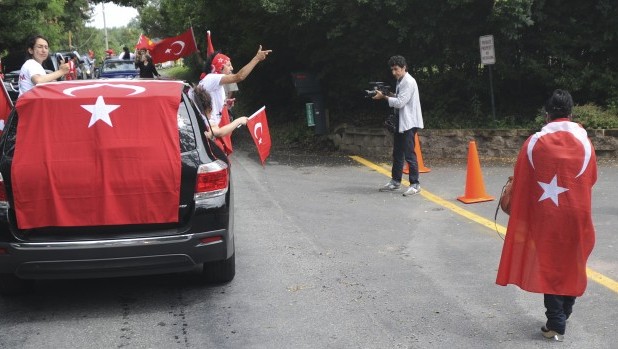
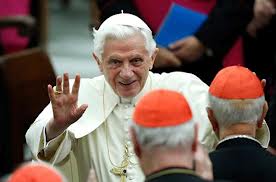
This past weekend, the sleepy village of Saylorsburg, Pennsylvania found itself caught up in an international squabble. Its population of just over a thousand grew by almost 30 percent as protestors from around the country trekked to Pennsylvania’s vacation Mecca in the Poconos. What transformed this mountain hamlet into a scene of protest with bright red Turkish flags waving over pictures of Ataturk? Turkish imam Fethullah Gulen. Who is he? The short answer is that Gulen is an Islamic missionary residing in the US. The long answer is, well, let’s just say, it’s a bit more complicated, and in any case, far removed from the American conception of what constitutes a missionary. He is no Nate Saint or Jim Elliot, two of the men who sacrificed their lives trying to bring the Word of God to the Auca Indians in South America. Nor is he a William Carrey, who risked his life and endured unbelievable hardship to bring the gospel to India. Gulen takes missionary zeal to a new level. For those unfamiliar with the man and his mission, here is a short summary of the facts. It all began with Said Nursi, arguably the most influential Muslim apologist in Turkey during the 20th century. For many, he served as a bridge between the Ottoman Empire and the newly formed Republic of Turkey, but he was generally viewed as a threat by authorities and was often under house arrest. By any objective measure, Nursi was a moderate and an intellectual, and his approach emphasized the importance of education and science. After Nursi’s death, Gulen inherited the mantle of leadership, retained its focus and inspired businessmen to begin creating “capital” for the mission. A network of successful private schools was established in Turkey. Yet, there was always the threat that his teaching would irritate the army (secular state) and land him in prison. In 1999, a video of Gulen encouraging his followers to “move within the arteries of the system” was leaked. In the tape, he cautioned his disciples not to reveal themselves until they were in a position to take over the institutions of the state. Otherwise, their movement would be crushed by the secular authorities. The government soon filed charges against him for trying to overthrow the constitutional order. An arrest would have followed, except that Gulen had already flown the coop. Where does an Islamic preacher take refuge when godless secular authorities resort to force? Saudi Arabia, the birthplace of both Mohammed and Islam? Egypt, the cultural and academic center of the Arabic and Islamic world? Or maybe Samarkand, the epicenter of Turkish Islam? No. Gulen fled to the United States of America, and he has lived here ever since. Gulen claims he is here for health reasons, but this hardly seems to justify a 15-year stay, especially when Turkey has excellent doctors that he could easily afford. Because of his self-imposed exile, Gulen was tried in absentia in 2000 for plotting to overthrow the constitutional order, but in 2006, three years after the Islamist Justice and Development Party (AKP) came to power, he was acquitted. His American residency is even more bizarre given that he is one of the most popular and charismatic preachers in Turkey. Imagine Joel Osteen, Rick Warren or Charles Stanley relocating to a mountain village in the Ural Mountains of the Soviet Union at the height of the Cold War, and you will have some idea what it means for an Islamic teacher like Gulen to choose America as his second home. Gulen is a controversial figure even in Turkey where secularists believe his true aim is to implement sharia law and view his moderate version of Islam and copious references to the Sufi mystic Rumi as disingenuous misdirection. Conservative Muslims, on the other hand, believe Gulen has sold his soul to the devil precisely because of his moderate stance and support for inter-faith dialogue. They exhibit a perverse sort of naiveté when they hold up of Gulen and the Pope shaking hands as if it were iron-clad proof of Gülen’s apostasy. In any case, both sides are a stark reminder to us all that the center stripe is beset by perils from either side. His movement controls a network of companies worth between 25 and 50 billion dollars. Entities within the network are engaged in businesses including media, retail and construction. The Gulen movement, later rebranded as Hizmet, which means “service”, also operates schools in dozens of countries around the world, including the largest network of charter schools in the United States. However, the schools operated by Hizmet have run into trouble. Russia has banned the schools and the movement on grounds that they are a front for the CIA. Uzbekistan and Turkmenistan, Central Asian Turkic Muslim countries closed down his schools as well. And the Netherlands has cut funding to schools with connections to the Gulen movement. American opponents of the schools are becoming more and more vocal in their claim to have discovered a rash of improprieties. Another interesting twist to Gulen’s residency in America occurred in 2008 when he was suing the Immigration and Naturalization Service for refusing to grant him a visa as “an alien of extraordinary ability.” He sued and won with arguments that seem to contradict many of his own statements. Nothing about this is really interesting if we discount the fact that Gulen himself doesn’t even have a university degree. The real twist comes in the references submitted to the court in support of Gulen’s case. Individuals who recommended Gulen for a green card included Graham Fuller, former CIA officer and also former vice chairman of the National Intelligence Council (!), Morton Abrahamowitz, former ambassador to Turkey (!), and George Fidas, former CIA officer (!). Anyone who requires an explanation for why this is bizarre should be reading a story from the entertainment section. Given that the “ Green Card Through Investment” plans offers a path to US citizenship to any foreigner who can invest 1 million dollars in America, it should not be surprising that the CIA and State Department are going to bat for someone as influential as Gulen. Whether it is healthy or even ethical is another matter entirely. Now, back to the protest this past weekend. It was a humble event, but what it lacked in size it made up for in passion. In his opening remarks, the protest organizer Armagan Yilmaz complained about the clout Gulen has with local authorities. “They have somehow mobilized the entire town against us. They have even blocked us from parking. Our most fundamental democratic rights, the right to protest given to us by the American Constitution, have been thwarted by this fascist mentality. They have brought the fascism they employed in Turkey to America…” The crowd erupted in cheers of solidarity. Anyone who has spent much time listening to leftists in Turkey would have immediately recognized the phraseology and, were it not for the facts, one might be tempted to discount the speech as rhetoric. After all, fascism has gained some popularity of late as a slur for any opposing ideology. But, the characterization actually seems have some merit in this case. Put simply, fascism is a political ideology that combines militarism, state authority, ultranationalism, and a “partnership” between the state and the economy. Except for the last item in the list, Gulen is guilty on all counts. (Many in his movement actually praise the free market economy). While Gulen’s philosophy of tolerance, inter-faith dialogue and peaceful coexistence is well-known, in Turkish sources, he has often stated his support for the militant history of the Turkish nation, saying, “Then there is the nation which is a soldier from birth. It is born a soldier. Its lullaby is the song of the soldier and it dies as a soldier. It is in love with soldiering, raids, conflict and borders.” In Turkey, it is an open secret that Gulenists make up a large segment of the police force that has employed such excessive force in recent demonstrations. With regard to state authority and nationalism, Gulen’s views are clear. He has nothing but praise for the exploits of the Ottoman Empire. Even the most despicable practices, such as the enslavement of non-Muslim children, their conversion to Islam and their service as the Sultan’s elite Janissary forces, is portrayed in a positive light. One of the most obvious examples of his Turkish nationalism, and one that strikes closer to home, is the fact that most of the charter schools run by the movement teach Turkish to American school children. Back in Salyorsburg, protest organizer Yilmaz and the placards carried by protestors made it clear that their gathering has been motivated more by recent events in Turkey where Erdogan’s government has brutally suppressed demonstrations than by anything that Gulen has done recently. Indeed, the perceived ideological connection between Gulen and Erdogan appears to be the reason they have directed their energies against the “American tentacle” of the Erdogan Leviathan. One protestor held a sign that read, “What? No water cannons for us?” This was a reference to the use of force by Turkish police against protestors in cities throughout Turkey. Another sign read “FBI Get Out of Bed With Gulen in Houston”, a reference to the fact that the Gulen Institute is listed on the FBI’s Community Outreach page. The insinuation requires an understanding of Turkish “secularism”, which not only separates mosque and state but actually subjects the mosque to the state, so any “cooperation” with religious organizations is viewed as capitulation. Another sign said, “"Stop stealing our taxes for your jihad.” Gulen’s educational activities are often characterized as camouflage for proselytism though evidence of any such activity is scant. During his remarks, Yilmaz said that they had compiled a 570-page file of Gulen’s activities in the United States, including complaints from teachers who were victimized in the charter schools, and that this would be handed over to the authorities with a request to file criminal charges. Mary Addi, a former teacher in the Gulen-inspired schools, also spoke at the rally. She said that she and her husband had both been employed at the charter schools for five and a half years and had been trying to get the US government to investigate. She said the schools were a cover for illegal immigration practices, that American teachers were discriminated against in the schools, and that the schools extorted money from their Turkish employees. Addi said that she and her husband had provided the authorities with documents of these crimes but that no arrests had yet been made. At the end of the rally, a black banner that read, “The Most Dangerous Terrorist in the World” over a picture of Fethullah Gulen was hoisted, and Yilmaz said, “This is the Fethullah Gulen we want the American people to understand. He is an enemy of the people, an enemy of democracy and a very dangerous proponent of sharia law.” It may be a very tough idea to sell here in America.
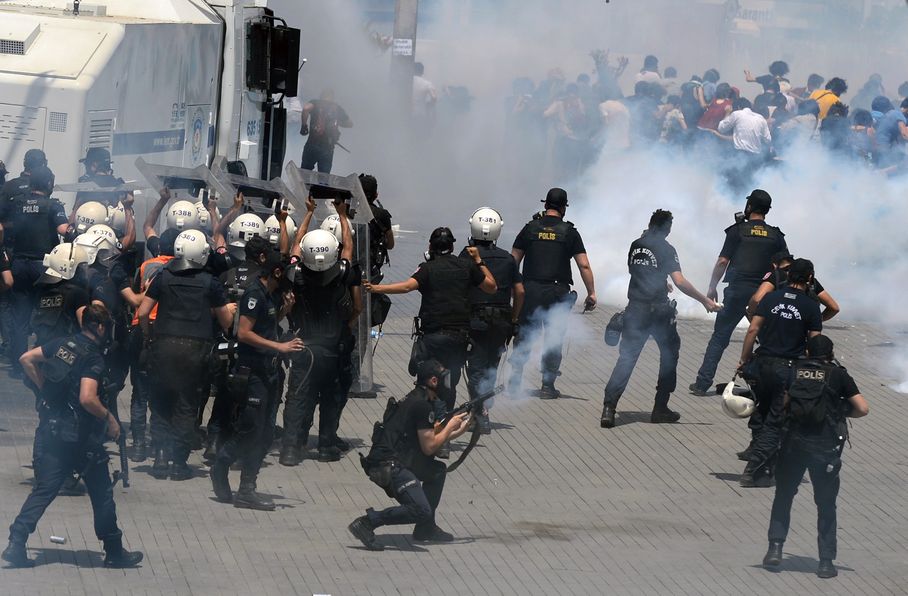
What began on May 28th as a small demonstration has quickly mushroomed into a nationwide protest against the oppressive tactics used by Erdogan's AKP government to suppress dissent. On Tuesday, concerned citizens gathered in Gezi Park near Istanbul’s famous Taksim Square in an attempt to prevent the destruction of valuable green space for yet another shopping mall. Police attacked the protesters with pepper spray and water cannons, a tactic which backfired and has led to larger, more determined protests every day since. Hundreds of people have been injured in the clashes, including reporters. Several have sustained injuries serious enough to require emergency surgery, and there are unconfirmed reports of two deaths. The protests have now spread to other major cities including Ankara, Bursa, Izmir and Adana. Protesters in Gezi Park kept up their vigil through the night. On Friday morning at 5:00 am, police with pepper spray and teargas dispersed the crowd, but by Friday afternoon the protest had swollen to over 4,000 and more showed up for a rally at 7:00 pm. The protests keep moving around the square and along Istiklal Avenue as police drive them from one location to another. While most people have tried to conduct a sit-in protest, some have resorted to throwing rocks at the police. Amnesty International has condemned the government’s excessive use of force. “ The use of violence by police on this scale appears designed to deny the right to peaceful protest altogether and to discourage others from taking part,” said John Dalhuisen, Director of Europe and Central Asia Programme at Amnesty International. “ The use of tear gas against peaceful protestors and in confined spaces where it may constitute a serious danger to health is unacceptable, breaches international human rights standards and must be stopped immediately.” Observers with Amnesty International were also beaten with batons and tear-gassed. The organization is calling on the Turkish government to launch an investigation of abuses. Istanbul’s Urban Sprawl The city of Istanbul has, for decades, grown at an alarming rate, as people searching for work have left the undeveloped countryside and sought employment in industrial centers concentrated around the Sea of Marmara. Unrest and fighting in the Kurdish areas of eastern Anatolia have also contributed to the urban sprawl. Istanbul’s population of 14 million has very limited options when it comes to natural recreation. There are very few parks and green areas open to the public as the vast majority are military zones, palace gardens, historical sites and cemeteries. The green space per capita is among the lowest in Europe at only 6.5 square meters per person. Compare this with Amsterdam (45.5 square meters), Rome (45.3 square meters), Stockholm (87.5 square meters), New York (29 square meters) or London (27 square meters), and it is easy to understand why the residents of the city are upset. It's About Humanity Not Trees Although it was clearly the love of nature that started these peaceful protests, support has been generated by public sympathy for the victims of police brutality. Pictures of protesters being gassed and sprayed quickly went viral, provoking outrage among the public at large. Many people have tweeted the event live, bringing the protests into living rooms and offices throughout Turkey and the world. One of these was Akin Unver, who tweeted: “Police is the only one disturbing peace and creating violence here. Crowd is great.” “One gas canister lands right into the german consulate in gumussuyu right before my eyes.” “Counted 48 gas canister fires in 1 minute! This is extreme brutality #occupyistanbul #occupygezi.” Some, like Erkan Saka, were quick to point out the similarity between oppression in Syria and what the current Turkish regime is doing. “Those who terrorize their own people in the middle of the city are supposed to bring democracy to Syria if you can swallow that.” Others railed on the lack of coverage by mainstream Turkish media. Selim Siyami Sümer tweeted to a list of Turkish TV stations, “Just so you know, you are all history now. @haberturk, @ntv, @cnnturkcom, @Skyturk360, @startv, @atvcomtr, @kanalD” Early reports of fatalities, still unconfirmed, were also announced via Twitter by TurkeyEmergency. “The 16 year-old girl that has died as a result of a riot tank running her over will become a symbol of this revolt #occupygezi” Live feeds were also available. While we watched, police fired 37 teargas canisters at the crowd in approximately one minute, stopping only when it looked like the street was enveloped in fog. AKP Risks Popularity Erdogan’s AKP government holds a majority of the seats in Parliament, but the latest protests have caused some AKP supporters to question their loyalty. Hayrullah Öztürk had a teargas canister lobbed through the window of his car as he was driving by. He said, "I voted for the AKP, but the way things are going is not good. It is not good to be such a know-it-all." The Istanbul Chamber of Physicians also issued a statement calling for restraint, "It is the duty of the Governor of Istanbul and the Istanbul Chief of Police to protect the lives and property of the conscientious people of Istanbul who are trying to make their voices heard so that Gezi Park is not destroyed. It is not their job to protect the profitability of the contractors who will build a shopping mall on Taksim Square."
This was a thinly-veiled reference to widespread corruption involving billions of dollars uncovered within the Public Housing Authority (TOKI). The Chamber’s statement also said, “ We can find no reason, conscience, or logic in the attacks of May 31, 2013 at 5:00 am on the Istanbul Chamber of Physicians first-aid tent using teargas canisters and water cannons. If this is the political stance of the AKP government, then to hell with your policies.”
The Chamber called for the resignation of those responsible. Turkish Spring? There can be little doubt that the energy and passion displayed by protestors over the last few days is not driven primarily by the specter of losing a few trees. Public anger may simmer for years before it boils over in outrage. The Arab Spring that swept through the Middle East and brought down governments in Libya, Egypt and Tunisia, started when a Tunisian street vendor named Mohamed Biouazizi set himself on fire, but was really the result of years of injustice suffered by the people. In Turkey, dissatisfaction with the Islamist-leaning AKP has also been building for quite some time. Recent developments, such as restrictions placed on alcohol sales, which is widely viewed as "creeping sharia" by secularists, have turned up the heat on the public pressure cooker. Will it be enough to blow the lid on the AKP? Public outrage is an unpredictable phenomenon. The AKP would do well to remember this. People can get in a spring-cleaning frenzy when the dirt becomes more than they can bear.
The pope’s resignation seems to have surprised almost everyone, everyone that is except the Iranians. In spite of the official Vatican statement that the Pope’s resignation was due to his failing health, Nader Talebzadeh, an Iranian journalist and film director, told an audience at Imam Khomeini International University the real reason for the Pope’s resignation. “In the past 600 years no pope has ever resigned,” he said. “Therefore a question arises in the public mind as to the reason for it. Of course, the justification provided by the West is that the Pope has grown old.” Talebzadeh claims that the truth behind the Pope’s surprise announcement is related to a book most of our readers have probably never heard of. “A gospel named the Gospel of Barnabas, which recognizes the prophet of Islam, which Christianity claims to be fake, is the reason [for the Pope’s resignation]. Throughout history, whenever this gospel was found it was quickly bought and disappeared. It is a gospel in which the name of Islam’s prophet has been mentioned many times.” Talebzadeh goes on to say that the gospel was found in 2000 by the Turkish police and is being kept there. He is referencing stories that emerged in the Turkish press, and then throughout the Middle East last year, one of which claimed that the Vatican had requested a copy of this book. These claims are not new. In the last century, there has been significant interest in the Gospel of Barnabas and several claims to have found early copies of this controversial gospel. The book made a stir in the early 1900’s when it was translated first into English and then Arabic. It made headlines in Turkey in the 1980s after a coup carried out by the military to suppress leftist sentiment. Pakistan has run excerpts from the book in its national newspapers for years. Various Muslim scholars have claimed that it is the truest extant copy of the words of Jesus. Talebzadeh directed a film about the life of Jesus entitled “The Messiah”, which is based on the Gospel of Barnabas. The Gospel of Barnabas reflects many elements of Islamic theology, most notably the claim made by Jesus himself that he was not the Son of God, but that people would pervert his message and make this claim. Another interesting fact is that John the Baptist is replaced everywhere in the Gospel of Barnabas with Jesus, who claims to be preparing the way for Mohammed. The story behind this enigmatic text is as interesting as the storyline is fantastical. There are only two extant manuscripts of the Gospel of Barnabas, and only one is complete – the Italian version presently kept in the Austrian National Library; the other is a half-finished Spanish manuscript found in the 1970s in Australia. The Italian version eventually made its way into the library of Eugene of Savoy, arguably one of the greatest generals of his time. When he died, it was bequeathed with his entire library to the crown. George Sale mentions the Gospel of Barnabas in the introduction to his English translation of the Qur’an. Sale had in his possession a complete copy of the Spanish version. In fact, the extant Spanish text is likely one that was being copied from Sale’s text when he died at the young age of 39. In the West, the extant versions seem to have first surfaced in Amsterdam of the early 1700’s, and although the Gospel of Barnabas was discussed by intellectuals, it was eventually forgotten until 1907, when it was translated into English by Lonsdale and Laura Ragg from the Italian version kept in Vienna. In their introduction, the Raggs pointed out many of the historical inaccuracies and explained why they believed the book was likely a forgery. However, their English version was translated into Arabic, the introduction was omitted, and the rest of the story about how the church suppressed the truth and hid the gospel is history, well, history of the sort one finds in state-run schools, changed and distorted beyond recognition. Nader Talebzadeh gave no evidence for his assertion that the Gospel of Barnabas was the reason for the Pope’s resignation, but the implication for his audience was clear. The Pope had read the Gospel of Barnabas, understood the truth and could not in good conscience continue to lead a church which had suppressed the truth for so long. In other words, the Pope is somehow principled enough to recognize the truth but not courageous enough to say it. The rumor that a scandal nicknamed VatiLeaks, involving gay prelates inside the Vatican, may not sell as many copies of his movie, but it is more plausible by far than any claim that the Gospel of Barnabas is behind the Pope’s resignation.
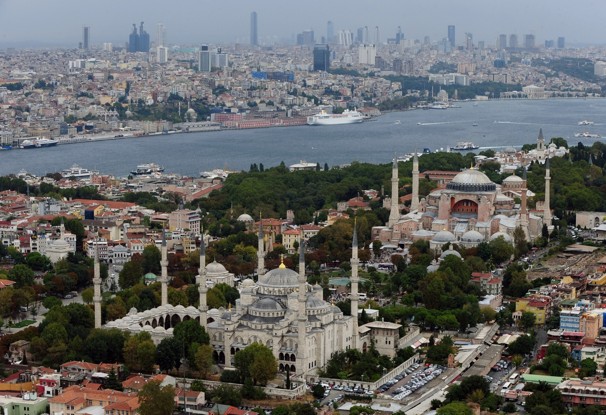
A commission of the Turkish Parliament has agreed to consider a proposal to open the Hagia Sophia up to Muslims for worship and officially recognize it as a mosque. See this link for the story. http://communities.washingtontimes.com/neighborhood/looking-luke/2013/feb/5/turkish-parliament-considers-converting-hagia-soph/
We are conducting a survey to understand international sentiment on the issue. Take a minute to respond to the survey (only two questions).
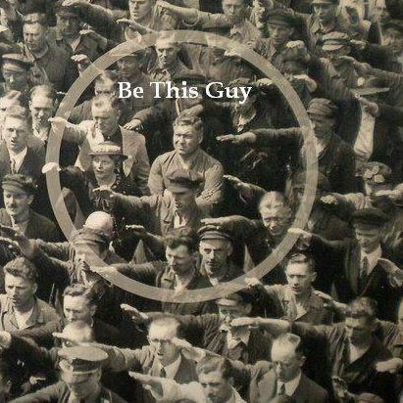
In an age when there is so much concern about political correctness, tolerance, minority rights and the public good, it is essential to remember that the smallest minority in the world is the individual.
The individual has no group lobbying for him, no party representing him. Movements, parties, churches, sports teams, associations, and all other "group-think" entities are, by definition, "collectivist". They unite people around common values and goals, not individual ones. There is nothing inherently wrong with any of them. In fact, they are an expression of "individual" choices.
Still, there is the danger that these "individual" choices made in a "group-think" environment will trump what is the essence of political freedom - the ability of the individual to live his life relatively free of unnecessary constraint. This was clearly in the forefront of the American founders' minds when they used the language "...endowed by their Creator with certain unalienable Rights, that among these are Life, Liberty and the pursuit of Happiness.
Life, Liberty and the Pursuit of Happiness are all explicitly "individual" matters not societal ones. The purpose of law, the meaning of freedom is the protection of individual rights. This is not to say that "social justice" is an invalid concept, but the subjection of the minority to the majority is, and always will be, tyranny.
Those who know me well understand my deep love for the people and country of Turkey. I will always view my time there as one of the greatest learning experiences of my life. These same people know that my devotion is not blind either. I have never written an article about the corruption and injustice for the people in the Sudan, but I have written many about similar problems in Turkey. It's not that I don't care about the Sudan. I do, but I only have so many hours in a day and Turkey is closer to my heart.
My intent has always been to help those outside of Turkey understand the country, its people and their various cultures. It has always been my hope that any criticism would be viewed as constructive. The Sledgehammer (Balyoz) case is no different.
I'm not privy to all of the evidence and haven't sat through the trials, but I have poured over hundreds of pages, including court petitions, trial summaries, parts of the indictment and expert witness reports regarding the evidence. It simply doesn't pass the 'smell test'. Something is wrong here.
A few days ago, I received an email from the sister of one of the defendants, asking the following questions (translation my own). They are worth considering.
IS THIS WHAT GUILTY PEOPLE DO?
1. Do the guilty start a petition to have the “Trials Carried Live on Television” and submit it to the Ministry of Justice with 50,000 signatures?
2. Do the guilty insist that the person specified in the prosecution’s indictment as having "Prevented the coup” be heard as a witness?
3. Can the guilty obtain 30 expert witness reports from universities (METU, ITU, Boğaziçi, etc.) sworn expert witnesses and foreign forensic institutions demonstrating that the CDs presented against them as evidence are false?
4. Do the guilty insist that the court "appoint an expert witness of its own choosing just as long as one is appointed?"
5. Do the guilty demand that the expert witnesses who have reportedly submitted reports against them be heard in court? When this request is denied, do they then insist that the expert answer written questions?
6. Do the guilty insist that the Turkish Grand National Assembly’s Coup Research Commission examine the case?
7. Do the guilty petition the European Court of Human Rights?
8. Do the guilty submit a petition to the United Nations Arbitrary Detention Working Group?
9. Do the guilty return from abroad and say “put me on trial” without waiting for a court summons?
10. Do the guilty make a “1-minute” defense so as not to prolong the trial when facing a sentence of life in prison?
11. Do the guilty say to the tribunal during their defense, “Please look at me when I’m talking to you?”
12. Do the guilty say, “Please ask me anything,” during the cross-examination?
13. Do the guilty demand that individuals on the list they were supposed to have prepared, and who they commissioned or those they are said to have recommended being discharged from the Turkish Armed Forces be heard as witnesses?
14. Would the lawyer for the guilty risk facing charges for his client? When the court did bring charges, does this same lawyer say, “This is, for me, a medal of honor?”
15. Do the guilty file charges against the expert witnesses, police, prosecutors and judges who have accused them?
16. For the love of God, is there not a single witness to take the stand against the 326 individuals who are said to be guilty?
17. Let’s say a witness cannot be found, is there not a single piece of evidence against these guilty individuals, such as a signed document, wire-tapped recording, etc.
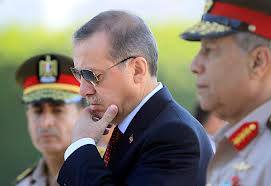
December 23, 2012 – For over a decade now, US administrations have hailed Turkey’s Islamist AKP government led by Prime Minister Erdogan as a model of democracy and “moderate” Islam. In the wake of the Arab Spring, Prime Minister Erdogan traveled to Libya, Egypt and Tunisia as an extension of American “soft power” to encourage fledgling governments to adopt the Turkish version of Islamic democracy. The problem here is that Washington is again allowing pragmatism to trump principle. The US is apparently so eager to find alternative vehicles of political expression to combat radical Islam in the Middle East that it is willing to gloss over the gross violations of basic human rights being perpetrated in its chosen “model” for the world of Islam. Return of the Ottomans? It is no secret that Erdogan and his chief advisors are ardent admirers of the Ottoman state, the vast empire ruled by the Turks for 600 years. This open admiration coupled with the government’s foreign policy strategies indicate that Erdogan's government is seeking to regain a similar type of influence in the region. The question is which Ottoman Sultan Erdogan is trying to emulate. Sultan Beyazid mi? In 1485 Sultan Beyazid II issued a decree banning the printing press in the Ottoman Empire. It would be two and half centuries (1727) before printing of Arabic letters would be permitted. In its 2012 report, the watchdog group Reporters Without Borders, which is based in France, confirms what press freedom activists and international observers have been shouting from the rooftops for years now. The secular, constitutional, democratic, Republic of Turkey, a candidate for EU membership and the only Muslim member of the North Atlantic Treaty Organization (NATO) has been waging a campaign of terror against freedom of the press, jailing more journalists for their professional activities than any other country in the world. With 72 journalists currently in prison pending trial, at least 46 of which RSF has determined are being incarcerated for their journalistic work, Turkey has more than twice as many reporters in prison as China (30), followed by Eritrea (28), Iran (26) and Syria (21). RSF called Turkey, “...the world’s biggest prison for journalists, a sad paradox for a country that portrays itself as a regional democratic model.” Although their tally differs slightly, The Committee to Protect Journalists, based in New York, also puts Turkey at the top of its list of offenders. Turkish journalist Mehmet Ali Birand is quoted as saying that the Turkish government “does not differentiate between these two major things: freedom of expression and terrorism.” Erdogan’s government claims that these journalists are being held for serious crimes, namely membership in armed terrorist organizations and that their detentions have nothing to do with journalism. But, the facts tell a different story. The AKP may not have banned the press, but it has ruthlessly suppressed dissent and intimidated its political opponents, especially those voicing their opinions in the public arena by sending them to prison and leaving them there to rot. Sultan Abdülhamid mi? In 1880, Sultan Abdülhamid responded positively to attempts by Sheikh Ubeydullah to win some degree of autonomy for the Kurds under Turkish protection. It looked like the Turks and Kurds might have found a federal solution, but it was short-lived and Kurdish aspirations were dashed when the Ottomans reasserted supreme control. This is not unlike to Erdogan’s much touted Kurdish Initiative, which was supposed to bury the hatchet between the two peoples. When the Kurds did not respond to Turkish magnanimity as he had hoped, he followed in the footsteps of Sultan Abdülhamid wearing boots of iron. The European Association of Lawyers for Democracy and World Human Rights (ELDH) reports that around 8,000 politicians, trade-unionists, journalists, artists, students, human rights activists and their lawyers have been the victims of mass arrests in Turkey since 2009. Many of these arrests have been part of the Turkish government’s operation against the KCK (Union of Communities in Kurdistan) under the Anti-Terrorism Law of 1991. Those arrested include Mr. Ragip Zarakolu, a publisher nominated for the Nobel Prize by members of the Swedish Parliament and a founding member of the Turkish Human Rights Association (IHD); Prof. Büsra Ersanlı, a constitutional law expert, and Ayşe Berktay, a respected translator, researcher and global peace and justice activist, who was one of the main organizers of the World Tribunal on Iraq in Istanbul in 2005. A total of 205 individuals have been indicted in the case and the next hearing is scheduled for February 4, 2013. Thirty-six Turkish and Kurdish lawyers were arrested in raids conducted across the country in November 2011. IHD Vice President Muharrem Erbey is still in prison awaiting trial and was not even released to receive the Ludovic-Trarieux Prize from the German Minister of Justice in November 2012. In questioning by parliament, Turkish Minister of Justice Sadullah Ergin admitted that 2,146 people are currently on trial in the KCK operation, of which 992 are in prison and 274 are elected representatives. This is just one example of the “mass trials” being conducted in Turkey, trials that often take years and during which even nonviolent individuals who do not pose a flight risk are held without bail. The European Commission’s 2011 Progress Reports states: “Frequent use of arrests instead of judicial supervision, limited access to files, failure to give detailed grounds for detention decisions and revisions of such decisions highlight the need to bring the Turkish criminal justice system into line with international standards and to amend the anti-terror legislation.” The ELDH report notes that since the founding of the European Court of Human Rights, the majority of violation judgments have been handed down against Turkey, even more than those against Russia. Sultan Mahmud mu? For centuries the Janissaries, the elite troops of the Ottoman Empire, were the terror of Europe and the spearhead of Ottoman military expansion into southern Europe. They may have been an asset on the battlefield, but they were always a thorn in the Sultan’s side at home. The Janissaries were often the de facto rulers of the Empire. When their demands were not met, they rioted. Their power was so great that they had the heads of unpopular viziers handed to them on a platter. In 1826, Mahmud II solved this problem once and for all by turning artillery on the Janissary barracks and slaughtering the entire lot. The “mass trial” technique used against political opponents was also employed against the military starting in 2008. In the Balyoz (Sledgehammer) and Ergenkon cases, hundreds of high-ranking officers and generals from the Turkish Armed Forces (TAF) are accused of plotting to overthrow Erdogan’s government. As a result, members of the armed forces opposed to the Islamist AKP have been liquidated, much like the Janissaries. Convictions were handed down in the Sledgehammer case earlier this year even though it has been convincingly demonstrated that some of the digital “evidence” in the alleged coup plot was fabricated. The Ergenkon trial is ongoing. But last year the four most senior military officers resigned in protest of the continuing detention of 250 officers. The need for reform in the military has been obvious for a long time. It viewed itself as the guardian of the secular regime in Turkey and wielded an inordinate amount of power over the country, power that the EU and proponents of democracy claimed was antithetical to the rule of law and government of, by and for the people. The army was a source of ultra-nationalism and displayed fascist tendencies. It often opposed the opening of the country to foreign involvement and investment, but it was committed to the secular principles of Atatürk, and supporters have long insisted that without it Turkey would be another Islamic state under sharia law. It is in this context that the military trials must be viewed. Many Turks would expect the military to have drawn up contingency plans for dealing with any attempt by a religiously motivated political party to impose sharia law and overthrow the constitutional order. This is not "coup planning." Unfortunately for the military, Erdogan's friends in the West apparently agree with Erdogan’s decision to deal with the military. So Erdogan is following in the footsteps of Mahmud II with this one-and-done approach to eliminating the problematic military establishment. The problem is that these mass trials have clearly violated principles of due process and certainly convicted innocent men. Necessary collateral damage? Maybe. As the Turkish proverb says, ‘Green wood burns too when lit alongside the dry.’ Sultan Selim mi? Selim III was a very reform-minded ruler who was well-educated and loved literature and calligraphy. He was said to be a brilliant musician and was a patron of the fine arts. His ascendancy to the throne was an occasion of great joy, for the people had hoped that he would restore their former superiority. Erdogan too has initiated a number of important reforms. His administration has, at least in word, recognized the rights of minorities more than any government since the Republic was founded. The political stability helped foster a period of incredible economic growth. He has pushed for democracy in the Middle East and championed Turkey’s membership in the EU. He also launched the Alliance of Civilizations with Spanish Prime Minister Zapatero. The window dressing is impressive. Selim III did not have an auspicious end. His efforts to reform the military eventually backfired and he abdicated only to be assassinated two months later. The blatant disregard for human rights may prove to be Erdogan’s undoing as well. Last week Prime Minister Erdogan went to Middle East Technical University to celebrate the launch of a satellite. The university has a reputation for opposing right-wing Islamic governments. Erdogan must have felt threatened as his visit was accompanied by 2,500 police, 20 armored vehicles and 105 protective vehicles. There were clashes between students and police. News of the event quickly spread around the world via social media, using the slogan, “Let the Sultan issue his decrees, the country belongs to us.” Western kowtowing
For decades now, many international and European organizations have condemned Turkey’s human rights record, but neither Washington nor Belgium nor the UN has ever recommended sanctions. It is time for change. Support for the oppressive policies of governments Washington views as a “strategic partner” comes straight out of Washington’s playbook of failure. Remember US support for Saddam Hussein in the proxy war to counter the expansion of Iranian power and how necessary it was to support the dictator? Iraq failed while Iran's mullahs remain in power. Recall the billions of dollars in foreign aid, including weapons, for Mubarak’s Egypt in the hopes that he could contain radical Islam. The oppressive policies of Mubarak’s authoritarian government only encouraged the “martyr” sentiment and today the Muslim Brotherhood ratified a constitution based on sharia law. It is time for President Barack Obama to call his friend Erdogan and have a frank conversation about what it means to be the leader of a free people under the rule of law. It is time to put principle above pragmatism. The last thing the West needs is a Sultan in Ankara. Read more: http://communities.washingtontimes.com/neighborhood/looking-luke/2012/dec/23/Turkey-erdogan-washington-sultanate/#ixzz2HUZKr0Y5
The article I wrote on Monday about Erdoğan's AKP government has drawn quite a bit of fire, especially on Twitter. Don't get me wrong; there was plenty of positive feedback as well. But, I was shocked at how some people viewed this article as a "hit piece" against Erdoğan. One person even asked how much I was paid to write this "hate-filled, malicious piece." Unfortunately, people tend to characterize "telling the truth" as hate speech whenever they disagree. Remember what Orwell said. "In times of universal deceit, telling the truth becomes a revolutionary act." The other knee-jerk reaction has been for people to label me a "neocon" or an ultra right-winger. This is hilarious. Hürriyet, one of Turkey's biggest newspapers, fell into this same error. The political views attributed to neocons are diametrically opposed to my own. Of course, Hürriyet may have simply been attempting to distance the newspaper from the views I presented all the while making it available for their readers. In that case, I understand their tactic. Then, there is the tried and true, "He's a Jew," line of attack. In their world, being a Jew is essentially a crime; it makes one less than human. On this point too I must disappoint them as I have not a drop of David's blood in my veins. What I simply want to point out is that all of us should judge people based on their actions and their opinions, and we should be sure we have the facts before we start making the judgments.
DALLAS December 7, 2012 – Seventy-one years ago today, America’s Pacific fleet was attacked by the Japanese Imperial Army at Pearl Harbor. Described by FDR as the “day of infamy,” this marked the beginning of a brutal chapter in the history of not only America, but all of the nations plunged into the Pacific blood bath. December 7th is also the release date of a new book by Dr. Mary Jane Hodges Vance entitled Mary of the Angels, the saga of a Spanish family and biography of her mother Maria de los Angeles Josefa Gabina Gamero y Cucullu. The story opens in Spain. It is 1836 and the country is being ripped apart by civil war between Loyalists and Rebels. Don José Maria Gamero makes a critical decision to take his wife and only son José M. Gamero away from the violence of his homeland and start a new life in the Philippines. It was, of course, impossible for him to know that his flight from war in Spain would put his grandchildren and great grandchildren in the middle of the Pacific theater of WWII almost a century later. José M. Gamero grows up in the Philippines and eventually marries a beautiful Spanish girl, the first of four marriages which result in twenty children. The rigors of childbirth and difficult conditions of life in the 19th century provide ample room for the Angel of Death to perform his duties. The family's strong Catholic faith is passed down through the generations and helps them makes sense of these regular visits from the Angel of Death. Maria de los Angeles chronicles the family’s adventures and misfortunes, providing unique insight into the lives of Spanish colonists in the Philippines and the hazards of living in a foreign land. It is a story of faith, which also meant excommunication when one of the Gamero daughters falls for a Russian Jew. Lorenzo is disowned for being seduced by and marrying a native girl. Salud falls for a predatory German. It is the journey of a family over four generations. The tale of how a colonial Spanish family became embittered towards America due to the Spanish American War and the annexation of the Philippines, but later fell in love with this same country when rescued from Japanese occupation. The story relates how the Angel of Death visited the islands in the flu epidemic of 1918 and the family’s self-imposed quarantine. With the death of Maria's father Don José Gamero when she was only three, the upper middle-class family gradually begins to suffer economically. All of the children contribute to the family coffers as they grew old enough to work. Maria de los Angeles gives the reader anecdotal glimpses of a world of mestizos, nationalism and religious fervor. She meets a young gringo from Quinlan Texas, an entrepreneur named Jesse Hodges, and even though he is sixteen years her senior, he eventually succeeds in capturing her heart. Maria chronicles the ups and downs of life, its reversals, its joys and its sorrows, all against a backdrop of the Church, which plays such a central role in their lives. The Great Depression and a series of failed ventures and broken promises put the family in dire financial straits, struggling just to survive, but this is exactly the skill set they will need to endure the horror of the Japanese occupation lurking just around the corner. With tensions in the Pacific rising, Jesse and Mary Hodges allow their oldest son Bobby to join the Navy. His letter of acceptance arrives six weeks before the Japanese invasion. On December 7, 1941, Bobby bids farewell to his family and goes with a friend to begin serving in the Navy. Later they receive word that Pearl Harbor has been bombed. The invasion of the Philippines begins on December 8th and except for a Christmas letter from Bobby received on December 19th, they never hear from their son again. Maria's poignant first-hand retelling of the occupation is a sobering reminder to us all that forces of evil haunt this world. The desperation and fear that swept the island when American forces abandoned it to the Japanese is palpable. It is a touching personal narrative about what it meant to live under an occupying army. Everyone was constantly subject to search, beating, seizure of property and nearly arbitrary capital punishment for the smallest infractions. One of their neighbors, a neutral Swiss citizen, was tied to a telephone pole, bayoneted and left to bleed to death because a shortwave radio was found in his home. All of the Americans in the area, including her husband, were interred at Santo Thomas, where there were thirteen toilets and twelve showers for 1200 men. This number would eventually swell to 5,000. Walter D. Edmunds characterized the Japanese invasion of the Philippines, saying, "In the Philippines the personnel of our armed forces almost without exception failed to assess accurately the weight, speed, and efficiency of the Japanese Air Force." The result was a humanitarian disaster, crushing defeat of the unprepared American forces and the infamous Bataan Death March. Mary of the Angels is a tale of survival, a steady stream of reverses and the indomitable human spirit in the face of hardship. The story is moving reminder that the difference between what someone will eat and what they will not eat is about 72 hours. Mealworms in the flour are viewed as a protein supplement. Iguana is added to the grill list. Mary Jane, Maria's daughter, stands in line at the slaughterhouse every day for the offal the Japanese don’t want - intestines, brains, tongue, congealed blood and other organs. Life is fragile, fleeting, prone to fly away like a butterfly. Women watch as the Japanese shoot their husbands and sons in front of the trenches that will become their graves and were dug with their own hands. Hunger eventually trumps fear as people loot and rob just to stay alive. The campaign of terror is everywhere around them. Comfort women are forced to provide sexual favors to Japanese soldiers on the street in broad daylight. Those who become pregnant have their bellies ripped open and are allowed to die. It is no wonder that prayer pervades the entire book. Prayers offered for the strength to survive the Japanese occupation, prayers that they will survive the liberation, prayers for their father in the concentration camp, prayers that sickness will not leave the children orphaned. In the end, the prayers are for America, the country Don José Gamero had despised. When the American forces return under General MacArthur, the battle for Manila is brutal and the Japanese resistance is fierce. Much of the city is destroyed. For months, their home is strafed by fighters and bombs explode all around. They survive in a homemade bunker. For two years, Maria and her children are not allowed into the St. Thomas internment camp. They do not know whether their father is alive or dead. Mary of the Angels tells a story America needs to remember. A story that shows how determination, love and faith can overcome any obstacle. The book is also a testimony to how technology is changing personal family chronicles. With on-demand publishing, any person with the perseverance and dedication of Dr. Mary Jane Hodges Vance can pass their family legacy down to grandchildren yet unborn. The book includes scanned images of marriage certificates, letters, newspaper clippings, obituaries, etc., reinforcing the ‘ring of truth’ which pervades the story. With the exception of Bobby, the oldest son enlisted in the Navy, the entire family survives the Japanese occupation, and anyone who reads the book can see beyond a shadow of a doubt that, true to her name, Mary really did have angels watching over her. Luke Montgomery, author of A Deceit To Die For, lived in the Middle East for over a decade. He holds an MA in Linguistics, speaks fluent Turkish and writes on foreign policy, religion and culture. You can follow his work at www.lukemontgomery.net, or find him on Twitter at @LookingFor_Luke and on Facebook.
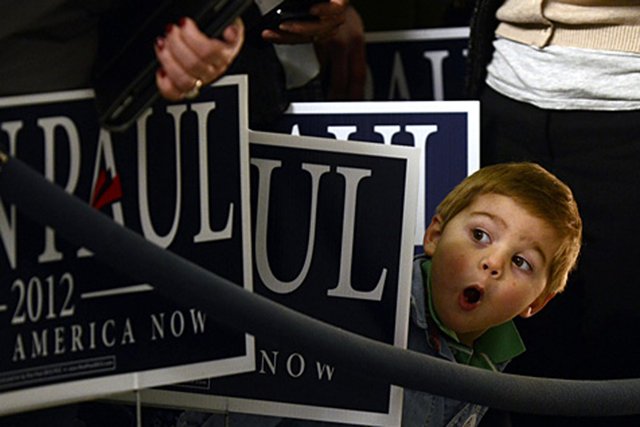
DALLAS November 14, 2012 – Today, a speech by a graying old man in the House of Representatives heralded the end of an era. It was quintessential Paul, long on liberty and short on government, hence the nickname “Dr. No”. It is a fitting title that he bears with honor for the simple reason that it's not the sort of title one earns by compromising on principle or the constitution. Ron Paul believed that a vote for almost any law put before the House was a vote against freedom, so his vote was generally “No.” Quietly, with conviction, he bucked the two-party system his entire life. His conviction was that law, especially federal law, is the greatest threat to our liberty. It would be hard to argue otherwise. After all, law is either restraint or compulsion. It restricts freedom and an overabundance of law is, by definition, the erosion of liberty. What's worse is a situation where the law is “for sale” in the form of legislators and government officials. It is the death of the long revered principle known as “the rule of law” reducing this vital principle to meaningless language buried in legal texts. That is where we find ourselves today. According to Dr. Paul, “The federal register is now 75,000 pages long and the tax code has 72,000 pages, and expands every year. When will the people start shouting, “enough is enough,” and demand Congress cease and desist.” Indeed, when new laws and regulations are passed at the frightening rate of thousands per year and old laws are scrapped because another party has come to power, how can anyone seriously talk about the “rule of law” if the rules are always changing? His speech today made it clear that we live by the golden rule of tyranny - the man with the gold makes the rules. “This neglect [of liberty and free markets] ushered in an age of redistribution of wealth by government kowtowing to any and all special interests, except for those who just wanted to be left alone. That is why today money in politics far surpasses money currently going into research and development and productive entrepreneurial efforts.” Simply put government has become a trough to slop the pigs with while the “farmer” politicians milk the populace of the fruits of their productive pursuits. Dr. Paul called for an intellectual awakening. “If it’s not accepted that big government, fiat money, ignoring liberty, central economic planning, welfarism and warfarism caused our crisis, we can expect a continuous and dangerous march toward corporatism and even fascism with even more loss of our liberties.” Dr. Paul said that the crisis we face cannot be solved if we do not understand the underlying causes. Those in power will continue to violate moral principle, taking from one group and giving to themselves and their friends, and they will do so legally, by passing laws. On the floor of the House, Dr. Paul asked his fellow members a long list of questions about the laws they had passed. He was clearly highlighting the compromised nature of American legislators. Here is a very short version of the list: - Why does the federal government restrict the drinking of raw milk?
- Why are Americans not allowed to use gold and silver as legal tender as mandated by the Constitution?
- Why can’t Americans decide which type of light bulbs they can buy?
- Why is the TSA permitted to abuse the rights of any American travelling by air?
- Why did the big banks, the large corporations and foreign banks and foreign central banks get bailed out in 2008 and the middle class lost their jobs and their homes?
- Why is there so little concern for the Executive Order that gives the President authority to establish a kill list, including American citizens, of those targeted for assassination?
One of the fundamental themes in Dr. Paul's final address was the use of force. He said, “The immoral use of force is the source of man’s political problems. Sadly, many religious groups, secular organizations, and psychopathic authoritarians endorse government-initiated force to change the world. Even when the desired goals are well-intentioned – or especially when well-intentioned – the results are dismal.” It may be government force used to invade foreign countries, or regulate economic activity (e.g. the massive US tax code, legal tender laws or business regulations), or constrain personal liberty and habits. He said that only a criminal mind could imagine it was permissible to enter someone else’s house and tell them how to behave, what they can eat, drink and smoke, or how to spend the fruits of their labor. It must have taken some courage to make this address to a “House-full” of legislators guilty of these very same infractions, exhibiting tendencies to the very same "criminal mind set." He reminded the House of Representatives that government does not have a monopoly on the use of force. Even though there is now an “army of armed bureaucrats” in the TSA, CIA, FBI, Fish and Wildlife, FEMA, IRS, Corp of Engineers, etc., the fact that citizens are “guilty until proven innocent in the unconstitutional administrative courts” and the government’s arbitrary and immoral use of force will eventually be used as a justification for individuals to do the same. He noted that government overreach will eventually result in violent pushback not all that different from the conflict experienced in the Revolutionary War against England. The amazing number of people signing petitions of secession after the election seems to indicate the US might be approaching a “civility cliff”. Paul ended his speech by placing the blame right where it belongs - on us, the people. "Our Constitution, which was intended to limit government power and abuse, has failed. The Founders warned that a free society depends on a virtuous and moral people. The current crisis reflects that their concerns were justified.” According to Paul, the current crisis is, in a nutshell, a crisis of morality, for we have become a nation that winks at sin, whether it is theft (through taxation), or gluttony (consumption that outpaces our production). He referred to the impending collapse of the US economy due to excessive debt, an entitlement philosophy and eroding civil liberties. His tone was not optimistic. In a thinly-veiled reference to one of the primary debates when he was booed for suggesting that the US treat other countries with dignity, not violate their sovereignty, and avoid the use of sanctions, he said, "A society that boos or ridicules the Golden Rule is not a moral society.” At one point, he also said, “I never believed that the world or our country could be made more free by politicians, if the people had no desire for freedom.” This was an indictment of the "sheeple" mentality that has caused the current state of affairs. Yet, he held out hope that the new generation would reject authoritarianism and embrace freedom. He said that homeschooling and the internet would be crucial tools in overcoming the deceptive federal government's monopoly on education and information, that productivity and creativity were the basis of personal satisfaction and that peace was the path to prosperity. Dr. Paul's tireless defense of liberty in the halls of the American empire has come to an end, and today his concern was that the Republic itself was in danger. Today, freedom lost its outspoken and courageous ally in the House of Representatives. Today is, in a very real sense, the end of an era. What the next one will look like depends entirely on whether or not Americans heed the warnings he issued today. The only way to prevent the rise of more authoritarian and bellicose government overreach is to #withdrawconsent and put more men of principle in Washington D.C.
|

 RSS Feed